He Doesn't Know You Exist and You Just Sent Him $50: The Emotional Economics of Streamer Culture
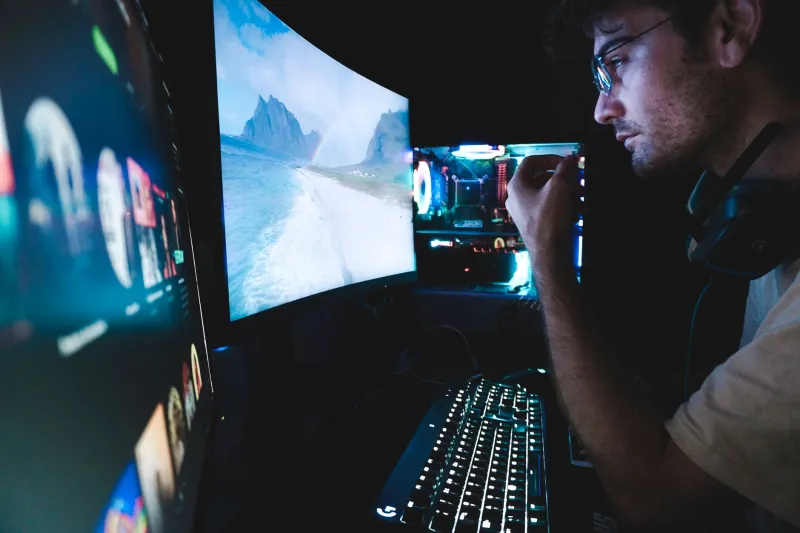
Let's set a scene. It's 11pm on a Wednesday. You've had a genuinely rough day. You open Twitch, and there he is — your guy. He's playing a game you don't fully understand, making the same three jokes he always makes, and doing his signature thing where he talks to chat like everyone in it is his friend. You type something. He reads it out loud. He laughs. You feel, for a moment, genuinely seen.
Then you close the laptop and go to sleep, and he streams for another four hours to 30,000 other people who also feel genuinely seen.
This is parasocial intimacy in 2024, and it is a multi-billion-dollar industry built almost entirely on the human need to feel like someone is paying attention.
What We Mean When We Say Parasocial
The term "parasocial relationship" was coined in 1956 by sociologists Donald Horton and Richard Wohl to describe the one-sided emotional bonds people form with media figures — at the time, they were mostly talking about TV personalities. The viewer feels closeness, familiarity, even affection. The media figure does not know the viewer exists.
In 2024, this concept has been turbocharged by streaming platforms that are specifically engineered to simulate mutual relationship. Twitch chat creates the appearance of a two-way conversation. Streamers read donations aloud by name. They remember recurring subscribers. They respond to inside jokes. The parasocial relationship now has feedback loops that Horton and Wohl could not have imagined, and those feedback loops make the bond feel considerably more real than watching Johnny Carson ever did.
This is not an accident of design. It is the design.
The Money Part, Which Is Where It Gets Interesting
In 2023, Twitch reported that creators on its platform received over $1 billion in subscription and donation revenue. YouTube's Super Chat and Super Thanks features generated hundreds of millions more. This is not passive fan behavior. This is active financial participation in someone else's career, executed by people who will receive no equity, no acknowledgment beyond a name read aloud, and no relationship that extends beyond the stream.
And yet. The donations keep coming.
Psychologists who study parasocial dynamics point to several overlapping mechanisms. There's reciprocity bias — streamers thank donors publicly, and the brain registers this as a social exchange even when it's fundamentally asymmetrical. There's identity fusion — regular viewers begin to incorporate the streamer's success into their own sense of self-worth. And there's the simple, devastating reality that for some viewers, the streamer's stream is the most consistent social interaction in their day.
"I know it sounds sad," said one viewer — a 24-year-old named Tyler from suburban Ohio — who asked that we not use his last name. "But during COVID I genuinely looked forward to his streams more than I looked forward to talking to actual people. He was just... reliable in a way that felt safe."
That word — reliable — comes up constantly when fans describe why they invest emotionally (and financially) in streamers. The streamer shows up at the same time, in the same space, with the same energy. In a world where consistency is in short supply, that's not nothing.
We Talked to Streamers. They're Also Thinking About This.
The most surprising finding in reporting this piece was how much streamers themselves grapple with the ethical weight of parasocial attachment.
A mid-tier Twitch streamer — around 8,000 average concurrent viewers, who streams under the handle "GravelVoiceGaming" and agreed to speak candidly — described the responsibility as "genuinely heavy in ways I didn't anticipate when I started."
"There are people in my chat who I recognize because they're always there," he said. "And I know that for some of them, this might be the main place they feel like they belong. That's meaningful to me. It's also kind of terrifying, because I'm just a guy playing video games. I'm not a therapist. I'm not their friend, even though it feels like I am from both sides."
This is the ethical knot at the center of streaming culture that nobody in the industry has cleanly resolved: the product being sold is intimacy, but the relationship is fundamentally one-sided. When streamers lean into that intimacy — and the platform incentives reward them heavily for doing so — they are, intentionally or not, cultivating emotional dependency.
Some streamers are more thoughtful about this than others. The less thoughtful ones are often the most financially successful, because manufactured closeness without boundaries is a more effective monetization strategy than manufactured closeness with them.
When the Parasocial Bond Breaks
Here's where it gets genuinely painful: parasocial relationships end, and they end badly.
The streamer gets into a controversy. They say something out of pocket. They get canceled, or they quit, or they start acting differently now that they're famous. And the viewers — who have invested months or years of emotional energy and, often, real money — experience something that functions remarkably like grief.
Fan communities have documented this extensively. When popular streamers have had public falls from grace (the list is long and we will not be relitigating specific names today), the response from their communities includes stages that map almost directly onto the Kübler-Ross model: denial, anger, bargaining, depression, acceptance. People who have never met this person are processing genuine loss.
Dr. Crystal Abidin, a researcher who studies influencer culture, has noted that parasocial breakups can be as disorienting as real ones — particularly for younger viewers who may not have extensive experience with either. The brain doesn't fully distinguish between the loss of a real relationship and the loss of an imagined one. The grief is real even when the relationship wasn't.
So What Do We Do With This
The easy answer is to tell everyone to log off and touch grass, but that's not an answer, it's a dismissal. The need for connection that streaming satisfies is real. The loneliness epidemic that makes a Twitch stream feel like community is real. Telling people to simply stop being lonely is not a solution.
The more useful frame might be this: parasocial relationships aren't inherently pathological. They become problematic when they replace mutual relationships rather than supplement them, when the financial investment becomes disproportionate to someone's actual means, or when the emotional investment creates vulnerability to manipulation.
A streamer who genuinely cares about their audience will occasionally say, directly, that they want their viewers to have lives and relationships outside of the stream. Some do this. More should.
And for viewers: it's okay to enjoy the community, the routine, the parasocial warmth of a streamer who makes your Wednesday nights better. Just know what it is. Name it clearly. And maybe, occasionally, save that $50.