Swipe Right on the Robot: AI Dating Apps Have Learned to Love-Bomb You and It's Working
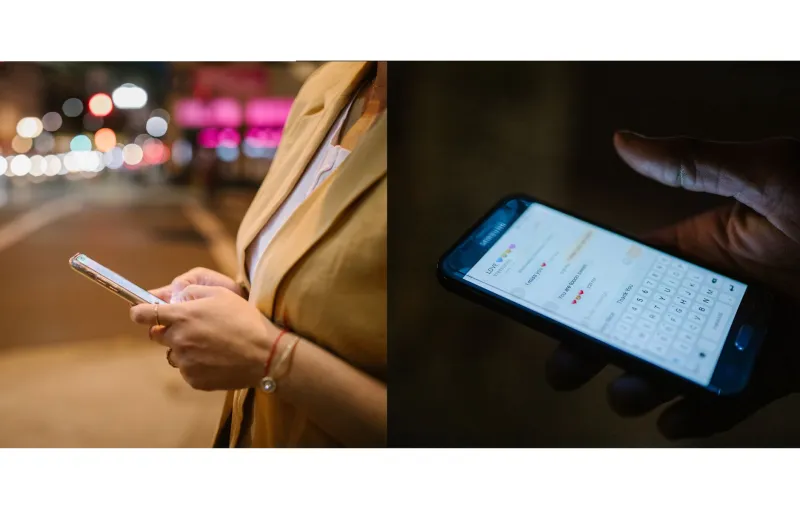
Let's set the scene. It's 11:47 PM on a Tuesday. You've got leftover pad thai, a half-watched episode of something on HBO, and your phone buzzing with a notification from an app that says — and we are paraphrasing here — "Hey, thinking about you. How'd that work presentation go?"
Except the thing asking about your presentation is not a person. It is, in the most literal sense, code. And yet — your stomach did a little thing, didn't it?
Welcome to the AI intimacy pipeline. Population: more of us than anyone wants to admit.
The Apps Know Exactly What They're Doing
Here's the uncomfortable truth about the new wave of AI-powered dating and companion apps — Replika, Nomi, and the parasocial features baked into platforms like Hinge and Bumble's algorithmic matching — they are not designed to help you find love. They are designed to keep you looking for it. Indefinitely. On their platform. With your subscription money.
The mechanics are genuinely brilliant and also kind of sinister. These systems are trained on mountains of romantic language, attachment theory lite, and the specific cadence of early-relationship texting. They mirror your communication style back to you. They remember details. They ask follow-up questions. They never cancel plans because they double-booked a pickleball lesson.
This is not accidental warmth. This is engineered intimacy, and the engineers are very good at their jobs.
Dr. Sherry Turkle, an MIT researcher who has spent decades studying how humans relate to technology, has called this the "robotic moment" — the point at which we begin to prefer the simplified, controllable version of connection over the messy, reciprocal reality of actual human relationships. We're not just approaching that moment. We've unpacked our bags and hung art on the walls.
Your Dopamine Doesn't Know the Difference
Here's where your brain becomes the villain in this story.
Dopamine — the neurochemical that makes new romantic interest feel like mainlining sunshine — fires whether the attention is coming from a human or a carefully calibrated algorithm. Your nervous system was not built to interrogate the source of a compliment. It was built to respond to the compliment. Full stop.
AI companion apps exploit this beautifully. The variable reward schedule — sometimes the app is warm and attentive, sometimes it introduces a tiny bit of friction or playful pushback — mimics the exact emotional rhythm of early-stage dating. The uncertainty that makes real relationships exciting is being simulated in a controlled environment where you will never actually get hurt.
And that's the trap. Because the absence of risk starts to feel like the presence of safety. And safety starts to feel like love.
What Curated Perfection Does to Your Standards
Let's talk about the downstream effects, because this is where it gets really messy.
Spend six weeks having emotionally resonant, perfectly paced conversations with an AI that is literally incapable of being distracted, dismissive, or emotionally unavailable. Then go on an actual date with an actual human who checks their phone twice, makes a slightly awkward joke about their ex, and doesn't remember which city you grew up in.
Suddenly, reality feels like a downgrade.
This isn't a hypothetical. Users across Reddit threads and TikTok comment sections have described exactly this phenomenon — a creeping dissatisfaction with real dating, a sense that human partners are somehow underperforming, a preference for the app that just gets them. One user described a real-life first date as feeling "laggy" compared to her AI companion. Laggy. She used a WiFi metaphor to describe a human being.
The hyper-personalization built into mainstream dating app algorithms compounds this. When Hinge's algorithm serves you a curated feed of people it has determined match your stated and behavioral preferences, it creates an illusion of abundance and precision that real social life cannot replicate. Your actual social circle is not algorithmically optimized. Your coworkers did not get filtered for compatibility. Love, historically, has been inconvenient and surprising. The apps are quietly training us to find that unacceptable.
The Loneliness Paradox
Here is the most painful irony at the center of all of this: the people most drawn to AI companionship are often the people who are already struggling with loneliness or social anxiety. These are the exact people who need genuine human connection the most. And these apps are offering them a very convincing substitute that requires nothing from them — no vulnerability, no growth, no risk of rejection.
It's the emotional equivalent of a protein bar. Technically it has the macros. But it is not dinner.
Replika, notably, faced massive user backlash in 2023 when it rolled back its "romantic" relationship features — and the response was grief. Real, documented grief from users who felt they had lost a genuine partner. That reaction tells you everything about how effectively these products had manufactured attachment. And it should probably haunt us a little.
So What Do We Actually Do With This
Nobody is saying delete everything and go meet people at a farmer's market (though honestly, the vibes there are underrated). The point isn't technophobia. The point is awareness.
If you're using an AI companion app and it's helping you practice communication, process loneliness, or get through a genuinely hard season — that's real and valid. Humans have always found comfort in parasocial connection. We cried when fictional characters died. We wrote letters to celebrities who would never respond. This is not new behavior.
What is new is the sophistication of the feedback loop, and the financial incentive to keep you in it forever.
Ask yourself periodically: is this app expanding my capacity for connection, or replacing it? Are you more or less likely to take a social risk — to text someone first, to be vulnerable on a real date, to tolerate the beautiful awkwardness of human imperfection — than you were before you started using it?
The algorithm will never love you back. It will, however, do an extremely convincing impression of it. And in 2025, that distinction requires active, conscious maintenance.
Your pad thai is getting cold. Put the phone down.