You Unfollowed Nobody: The Weird Guilt of Still Watching Your Canceled Fave's Content
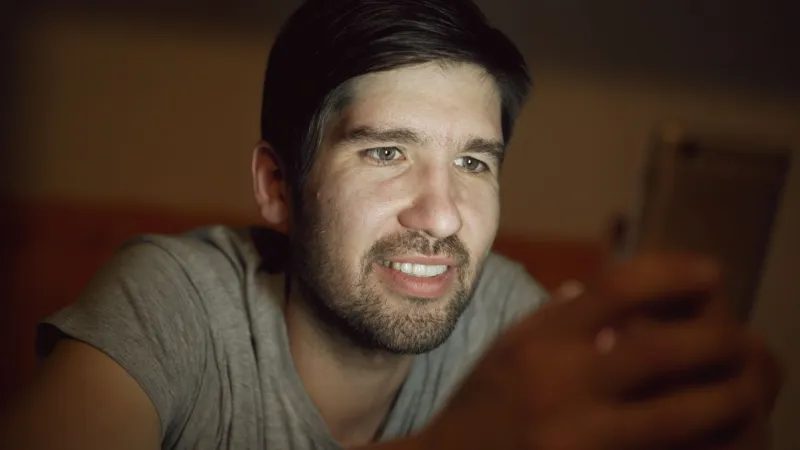
Let's start with a confession booth moment. Think of the last influencer who got canceled — properly canceled, not just "said something clumsy" canceled, but "a receipts thread went viral and people were making YouTube documentaries about it" canceled. Now ask yourself, honestly: did you unfollow them? Did it stick? Are you, perhaps, reading this article with their latest vlog open in another tab?
You are not alone. You are, in fact, in spectacular company. Because despite the ritual performance of the mass unfollow that accompanies every influencer implosion, the data — and more importantly, the comment sections — tell a very different story about what audiences actually do when their favorite creator turns out to be, at minimum, a lot.
The Anatomy of a Modern Cancel
For the uninitiated (hi, welcome, glad you found us), the contemporary influencer cancellation follows a fairly predictable script. Phase one: the allegation surfaces, usually via a long-form call-out post, a TikTok with dramatic audio, or a former friend who has finally had enough. Phase two: the discourse. Oh, the discourse. Twitter/X lights up, Reddit investigates, YouTube essayists begin filming. Phase three: the creator goes quiet or, worse, posts a tearful "I need to address something" video filmed in their car with ring light glare. Phase four: the unfollow announcements, which are their own micro-genre of performance.
And then, quietly, phase five: the drift back. The algorithm serves you one of their videos. You click. You tell yourself it's morbid curiosity. You finish the video. You do not re-follow, because that would be conscious, but you also do not leave.
The Mental Gymnastics Are Olympic-Level
The psychological infrastructure required to maintain a parasocial relationship with a problematic creator is genuinely impressive. Humans are extraordinarily good at compartmentalization when motivated, and "I enjoy this person's content" is apparently sufficient motivation to build some truly elaborate cognitive architecture.
The most common load-bearing beam in this structure is the separation of art from artist — a framework that was designed for appreciating Chinatown despite Roman Polanski's existence, now being applied to a 26-year-old's skincare routine videos. The logic gets stretched in interesting ways. "Their drama content is still good" (it is). "I'm not giving them money, just views" (you are giving them money, via ad revenue, but okay). "I want to stay informed" (you do not need seventeen minutes of a haul video to stay informed).
None of this makes you a bad person. It makes you a person with a parasocial relationship, which is to say: a person who uses the internet.
What Unfollowing Actually Costs (And What It Doesn't)
Here's the uncomfortable math that nobody in the unfollow announcement community wants to discuss: unfollowing a creator with a million-plus following is, in practical terms, almost entirely symbolic. It doesn't materially affect their income in a meaningful way. It doesn't remove their content from the platform. It doesn't constitute accountability in any structural sense.
What it does do is make the unfollower feel better, which is a legitimate human need but probably shouldn't be confused with activism. The unfollow has become the 2024 equivalent of the celebrity apology — a gesture that satisfies a social expectation without necessarily changing anything downstream.
This isn't an argument against unfollowing. If someone's content makes you feel bad, or you genuinely don't want to support them, absolutely hit that button. But the performance of the unfollow as a moral statement — the subtweet, the "I had to do it" TikTok — is doing work that it can't actually cash.
The Creators Who Come Back (And the Audiences Who Let Them)
The really fascinating case study in this whole ecosystem is the comeback arc. Because canceled creators don't disappear — not most of them. They go quiet for a calculated period, maybe six to eighteen months, then re-emerge with either a complete rebrand (new aesthetic, new content category, conspicuous absence of any reference to the thing that happened) or, more boldly, a direct return to form with a "I've done the work" energy that may or may not be substantiated.
And audiences — the same audiences who made the unfollow announcement — come back in numbers that would stun you. The comeback video routinely outperforms the creator's regular content. The discourse around the return generates its own wave of engagement. The cancellation, perversely, becomes a career event.
This is not hypocrisy so much as it is the predictable behavior of people who formed genuine emotional attachments to a content persona and missed it. The attachment was real. The loss was real. The return addresses the loss. Human brains are not particularly interested in the moral complexity when the emotional math is that simple.
So What Do We Actually Do With This?
Here's where SL Betty resists the urge to give you a clean answer, because there isn't one. The parasocial guilt spiral — that specific low-grade shame of enjoying content from someone you've publicly (or privately) deemed problematic — is a feature of modern media consumption that isn't going away. The platforms are designed to deliver it. The economy runs on it.
What might actually be useful is replacing the binary of "follow/unfollow as moral verdict" with something more honest: a personal audit of how this content makes you feel and whether you want it in your life, independent of what you announced in the group chat.
Do you actually enjoy the content? Does watching it feel good or does it feel like picking at a scab? Is your continued viewing funding something you find genuinely harmful, or are you punishing yourself for a human response to an emotionally complicated situation?
These are the questions. The unfollow button is just a button.
The brightness on your screen, though? Maybe turn that back up. Own your choices. We're all in this weird guilt spiral together.