Your Brain on TikTok: A Love Story, a Hostage Situation, and a Possible Breakup
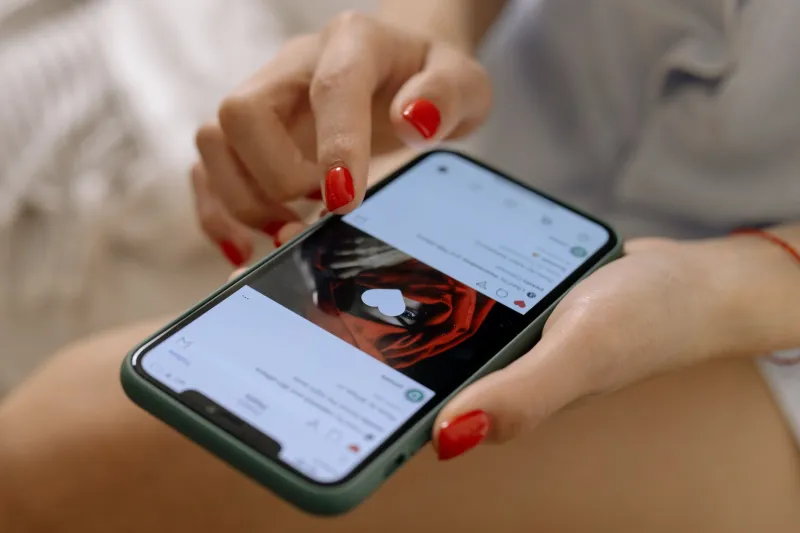
I tried to watch a two-hour movie last Tuesday. Made it forty-five minutes before I picked up my phone, opened TikTok, watched seventeen videos about a topic I have no memory of, and then felt vaguely guilty for the rest of the evening. This is not a confession I'm proud of. It is, however, an extremely common one — and if you're nodding along right now, congratulations, we've both been successfully processed by the algorithm.
Short-form video has been the dominant cultural force of the last four years, and TikTok has been its most potent delivery mechanism. We knew it was changing how we consumed content. What we maybe didn't fully reckon with is the degree to which it changed how we consume everything — attention spans, entertainment expectations, the basic architecture of what feels satisfying versus boring. This is a reckoning. Pull up a chair. Try not to check your phone.
The Rewire Job Nobody Consented To
Here's the thing about TikTok's algorithm that doesn't get said plainly enough: it is not a content recommendation engine. It is a behavior modification system that happens to show you videos. The distinction matters. Netflix recommends things it thinks you'll like based on your history. TikTok's For You Page is a continuous, real-time experiment in what keeps you from putting the phone down — and it is extraordinarily good at its job.
Psychologists have been sounding alarms about this for a while now, but the specific mechanism is worth understanding. Variable reward schedules — the same psychological architecture behind slot machines — mean that the unpredictability of what comes next is itself the hook. You're not watching for any specific video. You're watching for the possibility of a great video, which is an itch that can never fully be scratched. The result is what researchers have started calling "continuous partial attention" — a state where you're never fully present anywhere because your brain has been trained to expect a better option is always one scroll away.
For millennials specifically, this is a particular flavor of ironic hell. We grew up with enough pre-internet childhood to remember what sustained attention felt like. We also came of age during the social media explosion and spent our formative adult years getting our dopamine systems slowly restructured. We are, generationally speaking, the frog in the pot that's been simmering since MySpace.
YouTube Shorts Is Not a Cure, It's a Methadone Clinic
In the ongoing saga of "what happens if TikTok actually gets banned," a lot of attention has shifted to YouTube Shorts as the heir apparent. And look — Shorts is fine. It works. It's there. But treating it as a meaningful alternative to TikTok is like treating a gas station burrito as a meaningful alternative to an actual meal. Technically food. Not the same experience.
The difference isn't just the interface or the content — it's the underlying culture. TikTok built something genuinely strange and specific: a creative ecosystem where audio, trend cycles, subcultures, and humor evolved at a pace that felt almost biological. The "sounds" that became memes, the micro-communities that developed their own references and in-jokes, the way a video format could go from niche to mainstream to exhausted in the span of a week — that's not a feature set, that's a culture. YouTube Shorts is a feature set bolted onto a platform that was already something else.
Instagram Reels, similarly, has the aesthetic infrastructure of TikTok with approximately none of the chaos energy. It feels like a corporate team watched TikTok and said "we can make this but make it brand-safe" — which, yes, they did, and it shows.
The Ban That Might Save Us (Or Destroy Us, Honestly)
The ongoing legislative drama around TikTok's US future has been running long enough that it's started to feel like its own serialized content. Will it be banned? Will ByteDance sell? Will Congress understand how apps work? (Narrator: they will not.) But underneath the geopolitical noise is a genuinely interesting question: if TikTok disappeared tomorrow, would that be a digital detox or a collective psychological crisis?
The honest answer is probably both, in sequence. The first week would be rough in a way that would force a lot of people to confront how dependent their leisure time has become on a single app. There would be grief, there would be memes about the grief, the memes would live on Instagram Reels, and the cycle would continue. But there's a real argument that the disruption of TikTok's specific algorithm — the one that's been most aggressive about exploiting variable reward mechanics — could create space for different kinds of engagement to fill the void.
Or we'd all just migrate to whatever comes next and the rewiring would continue under new management. History suggests the latter.
What We Actually Lose If the Feed Goes Dark
Here's the counterpoint worth making, because this piece doesn't want to be just another hand-wringing screed about screens: TikTok genuinely democratized content creation in ways that mattered. Comedians without industry connections built massive audiences. Educators reached people who would never watch a documentary. Niche communities — disabled creators, queer creators, creators from backgrounds historically invisible in mainstream media — found audiences and income outside of traditional gatekeeping structures.
The algorithm that's been restructuring our attention spans is the same algorithm that surfaced those creators. The poison and the medicine came in the same bottle, which is a very 2020s kind of problem to have.
What comes after TikTok — whether that's a TikTok under new ownership, a genuine successor platform, or some fragmented landscape of smaller communities — will be shaped by what we collectively decide we want from short-form media. Do we want the dopamine delivery system optimized to keep us scrolling? Or do we want something that's actually, measurably good for us?
Probably the first one. But it's nice to ask.