Diagnosed in the Comments Section: What TikTok's Mental Health Industrial Complex Is Actually Selling You
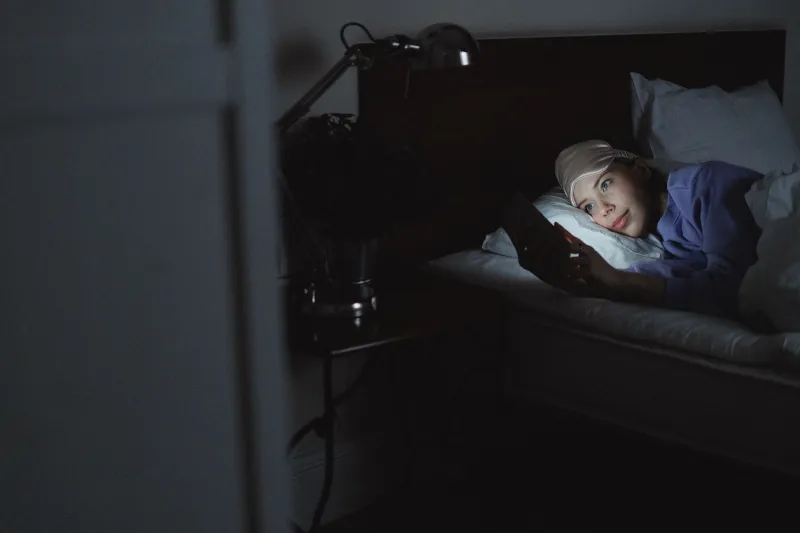
Somewhere in the last three years, your For You Page became a waiting room.
Not the fluorescent-lit, six-month-waitlist kind. The kind that feels warm and validating and immediately accessible at 2 AM when your brain is doing that thing it does. A creator with a ring light and a gentle voice tells you that what you're experiencing has a name, that it makes sense, that you are not broken — you are simply undiagnosed. The comments are full of people saying "this is literally me." You save the video. You feel seen.
And then, approximately nothing changes.
This is the central tension of the mental health content boom, and we need to talk about it honestly — without dismissing the real good it's done and without pretending the problems aren't serious.
How We Got Here and Why It Made Sense
Let's be fair to the origin story. For decades, mental health was either inaccessible (financially, geographically, culturally) or deeply stigmatized. Therapy was something people whispered about. Medication was a punchline or a confession. The idea that your anxiety, your depression, your complicated relationship with your body or your family — that any of this was worth discussing openly — was genuinely radical not that long ago.
Social media, and TikTok in particular, cracked that open. Visibility matters. Representation matters. When a 22-year-old creator says on camera that they have OCD and it doesn't look like what TV told you OCD looks like, and a million people in the comments say oh my god, me too — that moment of recognition has real value. It can be the first step toward someone actually seeking help.
We are not here to take that away.
But somewhere between legitimate advocacy and the current content landscape, something went sideways. Mental health content became a genre. Then it became a niche. Then it became a business model. And business models have incentives that are not always aligned with your actual wellbeing.
The Credibility Costume
Here's where it gets complicated. A meaningful portion of the creators who've built massive followings in the mental health space are not mental health professionals. Some are people with lived experience — valuable, but not the same thing. Some have taken a few psychology courses. Some have read a lot of books. Some have simply discovered that this content performs extremely well and leaned into it accordingly.
The visual language of authority on TikTok is easy to replicate. A bookshelf in the background. Measured, confident delivery. Diagnostic terminology deployed fluently. The word "research" used loosely and often. None of these things require a license.
And the algorithm, which rewards engagement above all else, has a very clear preference for content that is emotionally activating, immediately relatable, and conclusive. Which means the mental health content that spreads fastest tends to be the kind that gives you a tidy answer. You're not lazy, you're dysregulated. You're not difficult, you're traumatized. You're not sad, you're a highly sensitive person with unprocessed grief and a dismissive-avoidant attachment pattern.
These framings are not always wrong. But they are almost always incomplete. And completeness is not good for watch time.
The DIY Diagnosis Problem
Let's talk about what actually happens when someone self-diagnoses via social media content — because it's not nothing, and it's not harmless.
First, there's the confirmation bias spiral. Once you've decided you have, say, ADHD based on a series of TikToks, your brain starts cataloging every piece of evidence that confirms it and filing away everything that doesn't. You're not gathering information. You're building a case. This is how people end up deeply convinced of diagnoses that a professional evaluation would complicate or contradict entirely.
Second, there's what researchers call "diagnostic spread" — the way certain diagnoses become culturally dominant in ways that don't necessarily track with clinical prevalence. ADHD, complex PTSD, autism, narcissistic abuse, anxious attachment — these are all real, documented experiences. They are also, currently, extremely popular on TikTok. The overlap between "real condition" and "trending content category" creates a situation where people are more likely to identify with conditions that have robust content ecosystems than conditions that don't.
Third — and this is the one that keeps actual therapists up at night — there's the substitution effect. When consuming mental health content feels like doing the work of mental health, it can actually reduce the urgency to seek real help. You've watched forty videos about emotional regulation. You know the vocabulary. You've told your friends about your nervous system. The insight feels real. The change, often, does not come.
Actual therapists have a name for this: intellectual understanding without somatic integration. In plain English: you can know exactly why you do the thing and still keep doing the thing. Because knowledge, on its own, is not therapy.
The Accessibility Argument and Its Limits
The most common defense of mental health TikTok is that therapy is expensive, waitlists are long, and not everyone has access. This is true. The US mental health care system is genuinely, structurally broken in ways that leave millions of people without adequate support. If TikTok is filling a gap, isn't that better than nothing?
Sometimes, yes. A video that normalizes anxiety and encourages someone to seek help is net positive. Breathing exercises and grounding techniques shared in accessible formats have genuine utility.
But "better than nothing" is a very low bar, and it doesn't justify the creators who are actively monetizing people's pain with premium courses, paid communities, and merchandise built around the identity architecture of mental illness. There is something genuinely uncomfortable about a wellness business model that requires its audience to remain unwell enough to keep consuming.
What Actually Helps
None of this means you should torch your saved folder and never watch a mental health video again. It means consuming it the way you'd consume any media that touches something important: with your critical faculties intact.
Ask who is speaking and what their actual qualifications are. Notice when content is offering you identity rather than tools. Be suspicious of anything that makes mental health feel like a personality quiz with a satisfying result. And if you've been "doing the work" via content consumption for more than a few months and don't feel materially different — that's information.
Real help is still worth seeking. Community mental health centers, sliding scale therapy directories like Open Path Collective, and university training clinics exist specifically to serve people for whom traditional therapy costs are prohibitive. They are harder to find than a TikTok search bar. They are also more likely to actually move the needle.
You deserve more than a video that makes you feel seen for ninety seconds. You deserve something that actually changes something.