Underconsumption Got a Sponsorship Deal and I Got a Lecture About Paper Towels
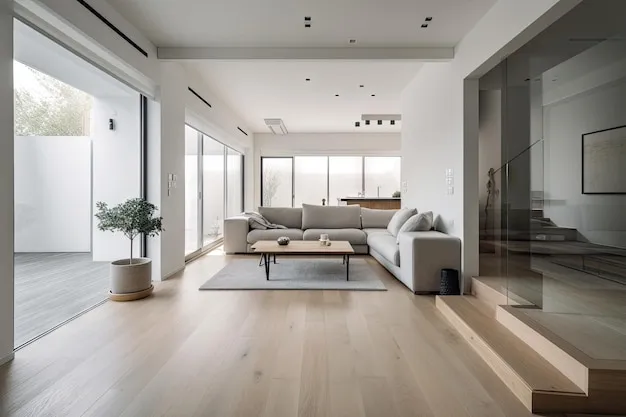
Photo: minimalist apartment empty shelf neutral tones decluttered home, via img.freepik.com
I want to be clear that I was rooting for the no-buy year. I wanted it to work. I wanted a movement about buying less to actually be about buying less—which, in hindsight, was like expecting a movement about drinking less to culminate in a $400 sober-curious mocktail course and an affiliate link.
The underconsumption thing had a genuinely good premise: we've been sold the idea that a purchase is a personality, that the next order will resolve the feeling, and that the feeling is a problem to be solved by the next order. Refusing that loop is a real idea. So of course it got branded, racked, and turned into a five-part video series.
The trend was fine until it got a media kit
You know the video. A woman in a cream-colored room whispers into a microphone about how she stopped buying things. Somewhere in the middle, she explains the one purchase that changed everything: the currently-affordable linen storage system, the one ceramic mug, the $38 dishcloth made of a material you have to look up.
Intentionality has become a store you can shop at. Minimalism has a starter pack. Simplicity, it turns out, comes with a welcome kit and a discount code that supports the creator.
Here's the tell: the aesthetic of not buying things costs money. Empty surfaces require storage. Linen requires a garment steamer. The beige requires a re-paint. Someone is getting paid for every square inch of your new austere life.
Notes from the performative minimalism front
The genre has stabilized around a few reliable characters:
The Inventory Person, who counts her possessions out loud on camera with the solemnity of a nature documentary and has 412 items, 60 of which are camera gear.
The Regret Arc, in which a creator announces she's spent the year buying nothing, then in February confesses to a "slip," which is narratively necessary because a slip is a second video.
The One Purchase, which is the entire business model wearing a cardigan. She's not telling you to buy it. She's just describing how her life improved immeasurably once it arrived. Link in bio.
The Haul, Rebranded, in which a woman who has "stopped shopping" receives a very large box from a brand she loves and holds each item up to the camera while explaining it's different because she thought about it a lot.
The class blind spot nobody wants to name
The no-buy year is a fundamentally easier project if you already own things. Frugality as aesthetic requires a full kitchen, a stocked closet, a chest freezer, and the kind of stability that makes next month predictable. When a creator says "I just stopped buying clothes for a year," there is an invisible third clause: because I had clothes.
For people who've actually had to not buy things—not as a challenge, not as content, but because the money wasn't there—underconsumption as an online trend has the distinct whiff of a vacation that someone else took. The shame of scarcity and the smugness of minimalism are two different emotions, and only one of them gets a ring light.
And the aesthetic is expensive in ways the trend never audits: the good sneakers you replace once instead of twice, the cookware that lasts, the repairs instead of replacements. All of that is a privilege wearing the costume of restraint.
What actually happens when you stop buying things
I did a version of this. Not for content, not on camera, mostly because my card statement made me feel a specific type of way in late January.
Here's what nobody tells you:
It's boring. The early rush—clearing out, decluttering, reorganizing—is just shopping with extra steps. Once the sorting is done, there's no dopamine left. The actual practice is standing in a store thinking about something you want, feeling the want, and doing nothing about it. That is not a montage. That's a Tuesday.
The feelings don't leave. This is the part the trend can't narrate, because it doesn't fit in ten seconds. The purchases were a regulation tool. Remove the tool and the temperature is still there. The cozy, aesthetic version of this is journaling. The real version is being irritated on a bus and having to sit with it like a person.
Hedonic adaptation is undefeated. The thing you bought less arrives, and six weeks later it's just a thing. The habit you built—not scrolling the store, not solving the mood with a cart—that one compounds. One of these is content. The other one is a life.
A modest proposal
The good idea is still here, buried under the sponsorships: most of us are not made happier by the next two-tap purchase, and some of us would benefit from a pause button. That's it. That's the whole philosophy. It doesn't require a beige room, an accountability challenge, a paid community, or a $38 dishcloth with a story.
So keep the habit and drop the personality. Buy less. Notice why you wanted to buy it. Don't post about it, or if you do, don't let a brand pay for the caption. And the next time someone whispers at you about intentionality while holding a discount code, ask them a simple question:
Intentional for whom?